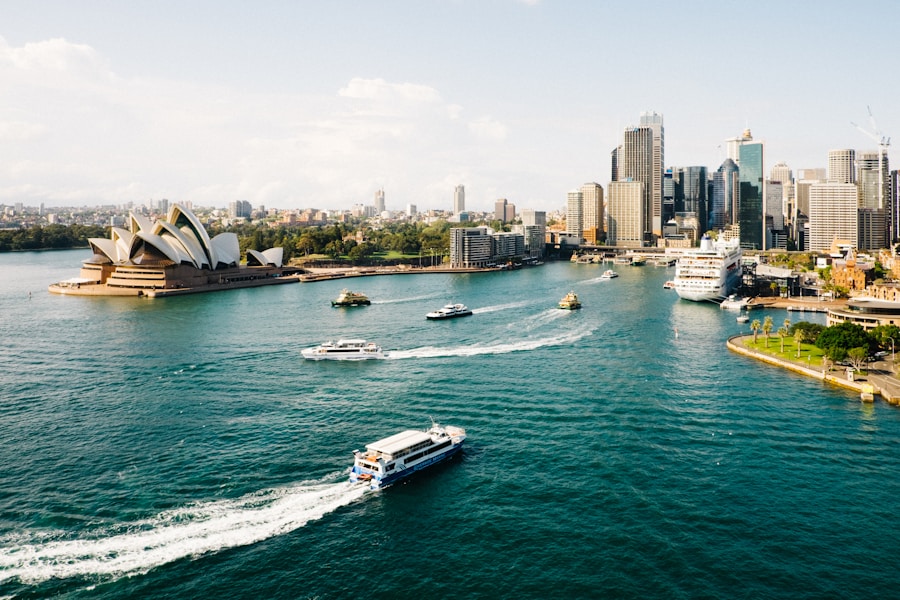
Australia and Oceania comprise a region of diverse island nations, cultures, and ecological systems, extending across the Pacific. The region includes Australia, New Zealand, Melanesia, Micronesia, and Polynesia, each with distinct cultural traditions and social structures.
The region is home to some of the world's oldest continuous cultures, with strong Indigenous knowledge systems that emphasise connection to land, community, and environment. These traditions continue to inform cultural identity and social life across many societies.
Australia and Oceania are also recognised for their environmental significance, including marine ecosystems, biodiversity, and climate-related challenges. These factors contribute to regional and global discussions on sustainability, resilience, and environmental stewardship.
Australia and Oceania comprise a geographically dispersed region across the Pacific and parts of the Indian Ocean, encompassing diverse island nations, cultures, and ecological systems.
The region is recognised for its rich biodiversity, marine environments, and longstanding cultural traditions. Its societies reflect a combination of contemporary institutional systems and Indigenous knowledge frameworks.
Indigenous peoples, including Aboriginal and Torres Strait Islander communities in Australia, Māori in New Zealand, and Pacific Islander communities across Oceania, represent some of the world's oldest continuous cultures. Their knowledge systems emphasise connection to land and sea, community life, and intergenerational responsibility.
Australia and Oceania are recognised for ongoing efforts in reconciliation, environmental stewardship, and cultural diversity. These approaches contribute to regional and global discussions on sustainable development, community engagement, and social interconnection.
Australia and Oceania continue to engage in processes of reconciliation, heritage recognition, and cultural inclusion, particularly in relation to Indigenous communities. These efforts reflect ongoing dialogue around identity, history, and social cohesion within the region.
Across Oceania, community-based traditions, customary governance systems, and spiritual heritage contribute to social organisation and collective identity. These practices emphasise respect, shared responsibility, and continuity across generations.
Christianity is widely practised across Australia and many parts of Oceania and has influenced aspects of social life, education, and community engagement, alongside a diversity of other religious and cultural traditions.
Australia and Oceania are characterised by culturally diverse societies shaped by Indigenous heritage and patterns of migration from different regions of the world.
Across the region, multiple languages are spoken, and communities reflect a wide range of cultural traditions and social practices. This diversity contributes to cultural exchange, social interaction, and evolving forms of community life.
Cultural participation, education, and creative industries continue to play a role in shaping social cohesion and intercultural understanding across the region.
Australia and Oceania contribute to global discussions on environmental stewardship, cultural diversity, and social development. The region's experiences in Indigenous engagement, community life, and environmental management inform broader perspectives on sustainability and cooperation.
Across the region, there is continued emphasis on inclusion, cultural understanding, and responsible management of natural resources as part of wider efforts toward long-term stability and resilience.
Within GCT Vision 2036, Australia and Oceania are recognised as an important region for cultural diplomacy, partnership-building, and leadership engagement in support of global cooperation.
GCT works with partners across Australia and Oceania in areas including:
Governments, academic institutions, cultural organisations, Indigenous communities, youth networks, environmental bodies, development partners, and individuals across Australia and Oceania are invited to engage with GCT in areas aligned with GCT Vision 2036.
Engagement may include cultural diplomacy, heritage initiatives, reconciliation-focused collaboration, environmental stewardship, and programme-based partnerships.
Participation supports the strengthening of cooperation, mutual understanding, and long-term institutional relationships across the region.
Governments, institutions, academic bodies, cultural authorities, and individuals across Australia and Oceania are invited to engage with GCT. Complete the form and the GCT Secretariat will respond.
Enquiry Received
Thank you for your interest in GCT Australia & Oceania. The Secretariat will be in contact within ten working days.