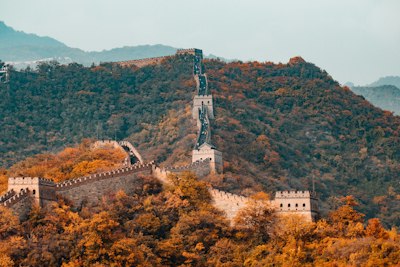
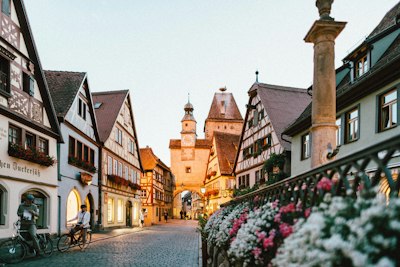
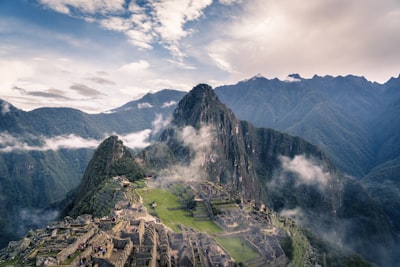
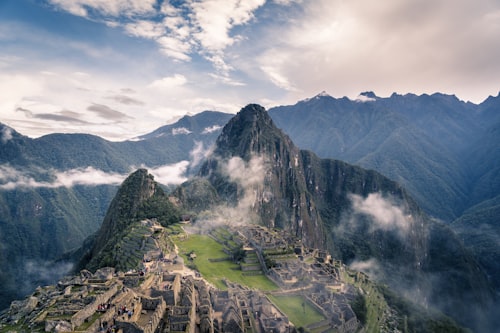
Every civilisation has contributed to humanity's shared heritage through knowledge, culture, governance, creativity, and ways of life. These contributions form a collective inheritance that continues to shape societies across generations. GCT advances the development of memorial and heritage sites as spaces of reflection, learning, and cultural continuity.
Many institutions around the world are dedicated to documenting history. Fewer are designed to recognise and present the enduring contributions of human civilisations in ways that are accessible, reflective, and forward-looking.
GCT's Memorial and Heritage Sites programme is developed to support this space. It advances the creation of physical and cultural environments where the contributions of diverse civilisations can be acknowledged, explored, and understood within a shared human context.
GCT approaches heritage as a collective inheritance. Rather than assigning ownership or hierarchy, GCT's approach is to create spaces that encourage recognition, dialogue, and learning across cultures and generations.
GCT's memorial and heritage sites are designed to recognise the contributions of civilisations across all continents as part of humanity's shared development. These recognitions are not intended to be exhaustive or definitive, but to provide a balanced and respectful starting point for understanding the diverse influences that have shaped the world.
GCT's memorial and heritage sites are grounded in the understanding that human development has been shaped by contributions from many civilisations across time and place. These sites aim to support recognition, learning, and dialogue by presenting heritage as a shared human experience, one that connects communities, informs the present, and contributes to future generations.
GCT's memorial and heritage sites are not standardised structures replicated across regions. Each site is developed through a context-sensitive approach that reflects the cultural, historical, and social realities of its location. GCT works in partnership with host countries, local communities, and heritage institutions to co-develop sites meaningful within their specific environment.
In many parts of the world, communities have experienced conflict, displacement, or periods of cultural disruption that have affected their heritage and social continuity. GCT recognises that, in such contexts, heritage initiatives can contribute to processes of reflection, dialogue, and long-term recovery when developed in a careful, inclusive, and locally grounded manner.
GCT's Memorial and Heritage Sites programme includes consideration of regions where historical events have shaped community identity and heritage expression. These sites are developed with a forward-looking perspective, supporting both remembrance and future-oriented community development.
This approach is consistent with international frameworks that recognise the role of culture and heritage in peacebuilding, social cohesion, and community recovery, including initiatives led by organisations such as the United Nations and the African Union. Heritage initiatives in these contexts are not limited to remembrance, they contribute to ongoing dialogue, mutual understanding, and the strengthening of social cohesion over time.
GCT's Memorial and Heritage Sites programme is currently at concept stage within the GCT Vision 2036 framework. The programme's direction and guiding principles have been established, with the next phase focused on developing partnerships and refining implementation pathways. GCT recognises that the process through which heritage initiatives are developed is as important as the outcomes themselves.
Institutions interested in contributing to the development of this initiative are invited to engage with GCT for further discussion. The programme is at a formative stage, with opportunities for partners to contribute to its design, implementation, and long-term development in alignment with GCT Vision 2036.
Through collaboration, partners can support the creation of heritage initiatives that reflect cultural diversity, encourage dialogue, and contribute to the continuity of shared human heritage across generations.
Governments, cultural authorities, academic institutions, heritage organisations, and communities are invited to engage with the GCT Memorial & Heritage Programme. Whether you are exploring site recognition, partnership, research collaboration, or community engagement, or simply wish to learn more, the GCT Secretariat welcomes your enquiry.
The GCT Secretariat acknowledges all submissions within ten working days.
Enquiry Received
Thank you. Your enquiry has been received. The GCT Secretariat will be in touch within ten working days.